Compare Best CRM software for small business Canada: Best CRM Software for Small Business Canada: 7 Ultimate Picks

Choosing the right CRM can transform your small business in Canada. Let’s compare the best CRM software for small business Canada to help you make a smart, data-driven decision—without the overwhelm.




Why Compare Best CRM Software for Small Business Canada?

Small businesses across Canada face unique challenges: limited budgets, regional market diversity, bilingual customer needs, and fierce competition. A powerful CRM system isn’t just a luxury—it’s a necessity for scaling efficiently and building lasting customer relationships.
Understanding CRM Needs for Canadian SMEs
Canadian small and medium enterprises (SMEs) make up over 97% of all businesses in the country, according to Statistics Canada. These businesses need affordable, scalable, and locally compliant tools. When you compare best CRM software for small business Canada, you’re not just looking at features—you’re evaluating how well a platform supports GST/HST tracking, bilingual communication (English/French), and integration with Canadian banking and tax systems.
- Over 60% of Canadian SMEs use cloud-based tools for customer management.
- CRM adoption increases sales productivity by up to 34% (Salesforce Research).
- Local data hosting is a growing concern due to PIPEDA (Personal Information Protection and Electronic Documents Act) compliance.
The Cost of Not Using a CRM
Businesses without a CRM often rely on spreadsheets, emails, and memory to manage customer interactions. This leads to missed follow-ups, duplicated efforts, and poor customer experiences. A study by Nucleus Research found that every dollar invested in CRM brings an average return of $8.20.
“A CRM is not just a database—it’s the central nervous system of your customer experience.” — HubSpot, 2023 State of CRM Report
Top 7 CRM Platforms to Compare Best CRM Software for Small Business Canada
When you compare best CRM software for small business Canada, it’s essential to evaluate platforms based on pricing, ease of use, local support, integration capabilities, and scalability. Below is a curated list of the top 7 CRMs that stand out for Canadian small businesses.
1. HubSpot CRM
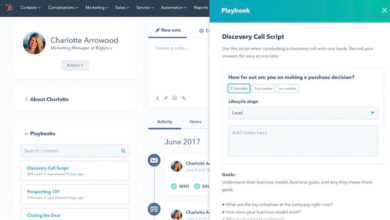
HubSpot CRM is a favorite among Canadian startups and small businesses due to its intuitive interface, powerful free tier, and seamless integration with marketing, sales, and service tools. It’s especially strong for businesses focused on inbound marketing.
- Pricing: Free forever plan available; paid tiers start at $45/month (billed annually).
- Pros: Excellent email tracking, live chat, automation workflows, and native integration with Gmail and Outlook.
- Cons: Advanced features like custom reporting require higher-tier plans.
HubSpot also offers dedicated Canadian customer support and complies with PIPEDA. Its data centers are located in the U.S., but encryption and access controls meet Canadian privacy standards. Learn more at HubSpot CRM.
2. Zoho CRM
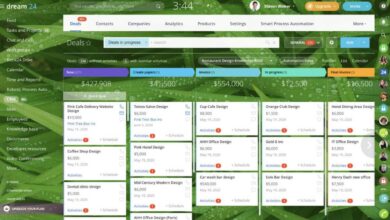
Zoho CRM is a versatile, AI-powered platform ideal for small businesses looking for customization without complexity. It’s particularly popular in Canada due to its competitive pricing and strong localization features.
- Pricing: Free for up to 3 users; Standard plan starts at $14/user/month.
- Pros: Zia AI assistant, multilingual support (including French), built-in telephony, and excellent mobile app.
- Cons: Interface can feel cluttered for new users.
Zoho has a Canadian presence with servers in Toronto, making it a top choice for businesses prioritizing data residency. It integrates well with QuickBooks Canada and supports bilingual email templates. Visit Zoho CRM for details.
3. Salesforce Essentials
Salesforce, a global leader in CRM, offers Salesforce Essentials—a streamlined version designed specifically for small businesses. It’s perfect for Canadian companies planning to scale.
- Pricing: $25/user/month (billed annually).
- Pros: Highly scalable, robust reporting, AppExchange for third-party integrations, and strong mobile access.
- Cons: Steeper learning curve; may be overkill for very small teams.
Salesforce supports Canadian tax calculations and integrates with Canadian payment gateways like Moneris and Stripe. While its primary data centers are in the U.S., it adheres to international privacy standards. Explore Salesforce Essentials for small business solutions.
4. Insightly
Insightly combines CRM with project management, making it ideal for service-based small businesses in Canada, such as consultants, contractors, and agencies.
- Pricing: Starts at $29/user/month (billed annually).
- Pros: Project tracking, workflow automation, relationship linking, and strong API for custom integrations.
- Cons: Limited phone support on lower plans.
Insightly supports multi-currency transactions, including CAD, and offers integration with Xero Canada and Google Workspace. It’s cloud-based with global data centers, including North American locations. Learn more at Insightly.
5. Capsule CRM
Capsule CRM is a simple, no-frills CRM that’s perfect for small teams who want an easy-to-use system without complex setup.
- Pricing: Free for 2 users; Professional plan at $18/user/month.
- Pros: Clean interface, excellent contact management, integrates with Mailchimp, Xero, and Google Calendar.
- Cons: Limited automation and reporting features.
Capsule is UK-based but widely used in Canada due to its simplicity and affordability. It supports CSV imports for easy data migration and offers email support with quick response times. Visit Capsule CRM to try the free version.
6. Pipedrive
Pipedrive is built for sales-focused small businesses. Its visual sales pipeline makes it easy to track deals and forecast revenue—ideal for Canadian sales teams.
- Pricing: Starts at $14.90/user/month (billed annually).
- Pros: Intuitive pipeline management, activity reminders, email integration, and strong mobile app.
- Cons: Limited marketing automation in lower tiers.
Pipedrive supports CAD pricing, integrates with Canadian accounting software, and offers phone support in English and French. It’s GDPR and PIPEDA-compliant, with data stored in AWS North American servers. Check out Pipedrive for a free trial.
7. Monday.com CRM
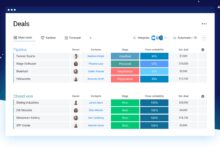
Monday.com is not a traditional CRM, but its customizable workflows allow small businesses to build a CRM from scratch—perfect for creative agencies, freelancers, and startups in Canada.
- Pricing: Starts at $8/user/month (billed annually).
- Pros: Highly visual, drag-and-drop interface, real-time collaboration, and automation.
- Cons: Requires setup time; not pre-configured for CRM use.
Monday.com supports bilingual boards, integrates with Zoom and Slack, and offers Canadian customer support. Its flexibility makes it a powerful tool for businesses that want full control. Learn more at Monday.com.
Key Features to Evaluate When You Compare Best CRM Software for Small Business Canada
When you compare best CRM software for small business Canada, don’t just look at price. Focus on features that align with your business goals, team size, and customer engagement strategy.
1. Ease of Use and Onboarding
Small businesses often lack dedicated IT staff. A CRM should be intuitive, with minimal training required. Look for platforms with guided onboarding, video tutorials, and responsive support.
- HubSpot and Pipedrive score high on user-friendliness.
- Monday.com requires more setup but offers long-term flexibility.
- Free trials and demos are essential for testing usability.
2. Integration with Canadian Business Tools
Your CRM should work seamlessly with tools you already use—especially accounting, email, and communication platforms popular in Canada.
- Integration with Xero Canada or QuickBooks Online Canada is crucial for financial tracking.
- Email platforms like Gmail, Outlook, and Mailchimp should sync smoothly.
- Payment processors like Stripe, PayPal, and Moneris should be supported.
Zoho CRM and Insightly lead in integration depth, while Capsule offers solid but limited connections.
3. Data Privacy and Canadian Compliance
Under PIPEDA, Canadian businesses must protect personal data. When you compare best CRM software for small business Canada, check where data is stored and how it’s protected.
- Zoho stores Canadian customer data in Toronto.
- HubSpot and Salesforce use U.S. data centers but comply with PIPEDA through encryption and access controls.
- Ask vendors about their data processing agreements and breach notification policies.
“Data sovereignty is no longer optional—it’s a business imperative in Canada.” — IT World Canada, 2023
Pricing Models: Finding the Most Cost-Effective CRM
Cost is a major factor when you compare best CRM software for small business Canada. But the cheapest option isn’t always the best value. Consider total cost of ownership, including setup, training, and add-ons.
Subscription vs. One-Time Fee
Most CRMs use a subscription model (SaaS), which is ideal for small businesses due to low upfront costs and automatic updates. One-time fee CRMs are rare and often lack cloud sync and support.
- Monthly vs. annual billing: Annual plans typically offer 10-20% savings.
- Per-user vs. flat-rate pricing: Flat-rate models (like Capsule’s free tier) can save money for small teams.
- Beware of hidden costs: Some CRMs charge extra for phone support, API access, or advanced reporting.
Free CRM Options Worth Considering
Several CRMs offer robust free plans that are perfect for startups and solopreneurs.
- HubSpot CRM: Free forever with contact, deal, and task management.
- Zoho CRM: Free for up to 3 users with basic automation.
- Capsule CRM: Free for 2 users with 250 contacts.
These free versions are fully functional for early-stage businesses and can be upgraded as you grow.
Localization: Why Canadian-Specific Features Matter
When you compare best CRM software for small business Canada, don’t overlook localization. Canadian businesses operate in a unique environment—bilingual markets, regional regulations, and distinct customer expectations.
Bilingual Support (English & French)
Quebec and federal institutions require French communication. A CRM that supports bilingual email templates, interface language, and customer segmentation is a huge advantage.
- Zoho CRM and Pipedrive offer French interface and support.
- HubSpot allows bilingual email campaigns and content personalization.
- Ensure your CRM can tag customers by language preference for targeted outreach.
Tax and Currency Handling
Your CRM should handle Canadian tax rules (GST/HST/PST) and display prices in CAD.
- Salesforce Essentials includes tax calculation features.
- Pipedrive supports multi-currency deals, including CAD.
- Integration with accounting software automates tax reporting.
Manual tax entry increases errors—choose a CRM that automates this process.
Canadian Customer Support
Time zone alignment and local expertise matter. A CRM with Canadian-based support or 24/7 English/French phone support can save hours during critical issues.
- Salesforce offers phone support with Canadian agents.
- HubSpot provides email and chat support with quick response times.
- Zoho has a Toronto office for enterprise clients.
User Reviews and Real-World Performance
What do actual Canadian small business owners say about these CRMs? Let’s look at real-world feedback from trusted review platforms.
G2 Crowd and TrustRadius Ratings
G2 and TrustRadius are leading B2B review sites. Here’s how top CRMs rank (as of Q2 2024):
- HubSpot CRM: 4.4/5 on G2, praised for ease of use and free features.
- Zoho CRM: 4.3/5, loved for affordability and AI tools.
- Pipedrive: 4.3/5, top-rated for sales pipeline clarity.
- Salesforce Essentials: 4.1/5, noted for scalability but complex setup.
Common complaints include slow customer support (Capsule) and limited reporting in free plans (all platforms).
Case Study: Canadian Small Business Success with CRM
Take Toronto Pet Care Co., a small veterinary service provider with 5 employees. They switched from spreadsheets to HubSpot CRM and saw:
- 30% increase in client follow-ups.
- 20% growth in repeat bookings within 3 months.
- Reduced admin time by 15 hours per week.
By automating appointment reminders and tracking customer preferences, they improved satisfaction and retention.
Final Recommendations: Which CRM is Right for You?
After you compare best CRM software for small business Canada, the right choice depends on your specific needs:
- Best Overall: HubSpot CRM – unbeatable free plan and ecosystem.
- Best for Sales Teams: Pipedrive – visual pipeline and deal tracking.
- Best for Bilingual Businesses: Zoho CRM – French support and local data hosting.
- Best for Scalability: Salesforce Essentials – grow without switching platforms.
- Best for Simplicity: Capsule CRM – clean, easy-to-use interface.
- Best for Project-Based Work: Insightly – CRM + project management.
- Best for Customization: Monday.com – build your own CRM workflow.
Always start with a free trial. Test the user experience, integration, and support response before committing.
What is the best CRM for a small business in Canada?
The best CRM depends on your needs. HubSpot CRM is ideal for most small businesses due to its free plan and ease of use. For sales-focused teams, Pipedrive excels. Zoho CRM is perfect for bilingual operations and data residency requirements.
Are there CRMs that support Canadian tax and currency?
Yes. Salesforce Essentials, Zoho CRM, and Pipedrive support CAD and can integrate with Canadian tax rules. When you integrate with accounting software like QuickBooks Canada or Xero, tax calculations are automated.
Can I use a CRM for free in Canada?
Absolutely. HubSpot CRM, Zoho CRM (up to 3 users), and Capsule CRM (2 users) offer free plans that are fully functional for small businesses and startups.
Is data privacy a concern with international CRMs?
It can be. While U.S.-based CRMs like HubSpot and Salesforce comply with PIPEDA, businesses handling sensitive data may prefer Zoho, which offers Canadian data hosting. Always review the vendor’s privacy policy and data processing terms.
How long does it take to set up a CRM?
Most CRMs can be set up in 1–3 days. Free plans like HubSpot and Capsule can be operational in under an hour. Complex setups with integrations may take 1–2 weeks. Use onboarding guides and support resources to speed up the process.
Choosing the right CRM is a strategic decision for any small business in Canada. By taking the time to compare best CRM software for small business Canada, you can find a solution that fits your budget, supports growth, and enhances customer relationships. Whether you prioritize ease of use, bilingual support, or scalability, there’s a CRM on this list that’s perfect for your business. Start with a free trial, involve your team, and make a data-driven choice that sets you up for long-term success.
Further Reading: